
The thing you would say if you picked up, in your words.
Your tenant is standing in water asking where the shutoff is. You know. Your assistant does not.
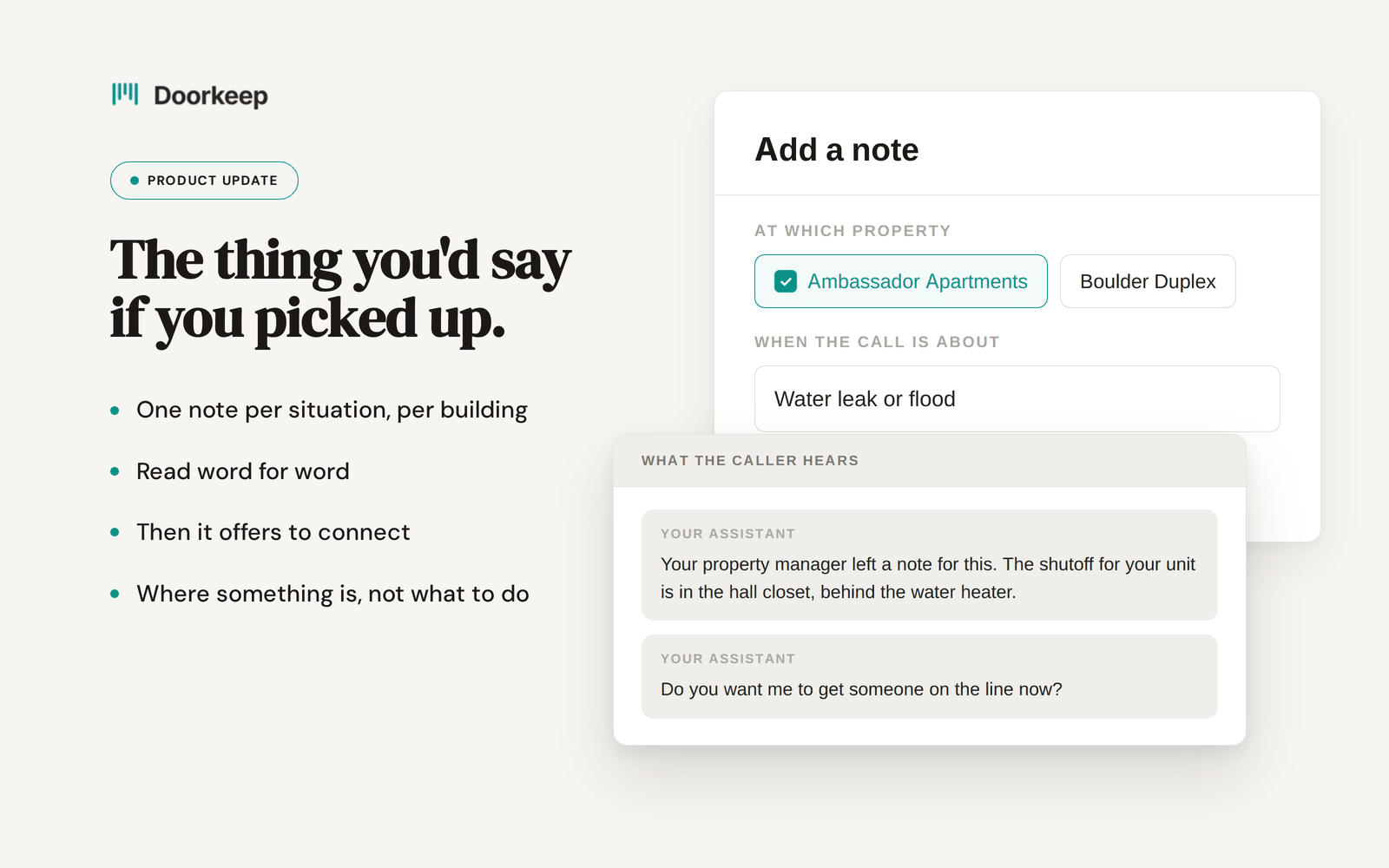
A situation note is one sentence attached to a situation on your escalation list, at one building. Where the shutoff is, where the panel is, what you supply. Your assistant reads it word for word, then rings your Call List.
One note, one building, one situation. A note belongs to a building, because a valve is rarely in the same place twice. Pick more than one property and each gets its own copy.
It reads once and stops. Your assistant does not explain the note, add to it, or answer questions about it. Your Call List rings right after, or a message is taken if nobody on it can be rung.
Where something is, not what to do with it. "The shutoff for your unit is in the hall closet, behind the water heater" is a note. "Turn off the water" is not. Anything that tells a caller to do something comes out before it is ever read, and you see what changed.
Nothing is read until you turn it on. Each note stays in review until you switch it on, and you can switch it off anytime. Notes you have turned on are still checked against our rules, so a rule we tighten applies to them too.
You sign it. Before a note goes anywhere, you confirm in writing that these are your words, that your assistant reads them exactly as written, and that a caller may act on them before anyone reaches them.
Never put access in a note. Anyone who calls about that situation at that building hears it, tenant or not. Door codes, gate codes, and where a key is kept do not belong in one.
Answers to general caller questions live in Knowledge. Situation notes are part of Doorkeep Pro.
Want to see this on your own calls?
Book a walkthrough and we'll set up your call windows, contacts, and knowledge together. That's me on the call, not a rep.
Available for U.S. phone numbers. Monthly or annual billing. Cancel anytime.
Fair Housing guardrails · Recording disclosed on every call · Emergency detection and escalation